Stump Grinding or Leave the Stump? What to Consider
A leftover stump is rarely as harmless as it looks. Here is how to decide what to do with yours.
September 22, 2026 · 3 min read
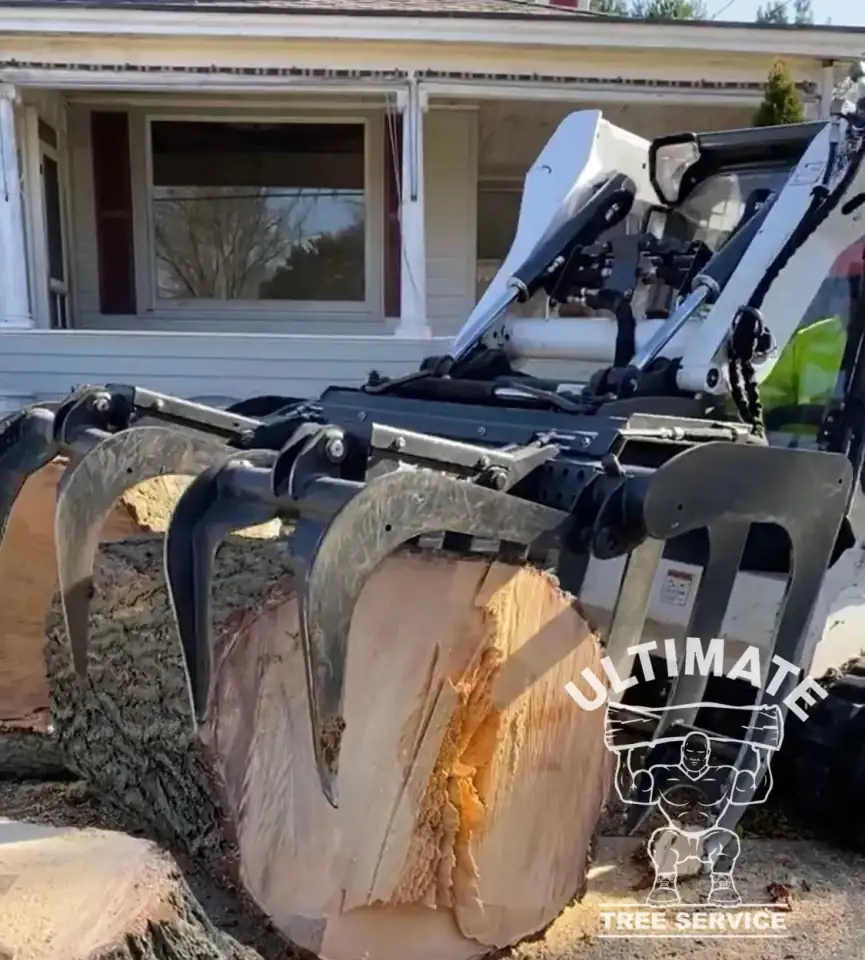
A tree comes down in your yard in Howell or Jackson, the crew hauls away the trunk and branches, and what is left is a flat stump at ground level. At that point it is easy to think the job is finished and move on. Whether to grind that stump out or leave it depends on a few things worth weighing before you decide either way.
There is no requirement that every stump has to come out right away. A stump tucked into a natural area at the back of a property, away from where anyone walks or mows, can sit there for years without causing much of a problem, slowly breaking down on its own. The calculation changes once that stump is somewhere the yard actually gets used.
A stump does not stay quiet on its own
A freshly cut stump, especially from a healthy tree, will often send up suckers: thin, fast-growing shoots around the base that the roots keep feeding for years. Left alone, those suckers can turn into a cluster of small trunks competing for the same root system, which ends up being more work to deal with later than the original stump ever was.
The everyday hazards a stump creates
Beyond the suckers, a stump sitting in the middle of a lawn is a hazard you walk past every day without thinking about it, until someone trips on it in the dark or a mower blade catches the edge. A low stump can hide under grass within a season, which makes it more dangerous, not less, once it is no longer obviously visible.
- A trip hazard for kids, guests, and anyone mowing after dusk
- A blade hazard for mowers and string trimmers
- A base where suckers and fungus can take hold
- An obstacle that keeps grass from growing evenly over that patch of yard
What a stump actually blocks
If there is any chance you want to plant something in that spot, whether it is a new tree, a garden bed, or simply level lawn, the old root mass underneath a stump will fight you the whole way. Roots decompose slowly, and digging around them for a new planting is a frustrating way to spend an afternoon compared to grinding the area clear first.
Grinding versus full removal
Grinding is different from full stump removal, which pulls the entire root ball out of the ground with heavy equipment and leaves a much bigger hole to fill afterward. For most residential yards, grinding is the more practical choice. It clears the surface hazard and stops the suckers without tearing up a wide area of surrounding lawn, and it avoids the risk of a full extraction running into a nearby fence line, a septic system, or buried utility lines that a homeowner may not even know are there.
How the grinding itself works
Stump grinding uses a machine to chew the wood down below the surface rather than pulling the whole root system out of the ground, which would tear up a much larger area of lawn. Ultimate Tree Service runs a Rayco RG100 4x4 for this, a compact grinder that fits through a standard 36 inch gate, so it can reach stumps in fenced backyards without driving equipment across a neighbor's property or pulling a fence panel first. The grinder works the stump down to ground level, chewing through the wood and the top layer of roots until nothing is left standing above the soil.
What is left when the crew is done
Grinding produces a pile of wood chips and leaves a shallow depression where the stump used to be, since the ground settles once the wood underneath is gone. Most homeowners either keep the chips as mulch for a nearby bed or have them hauled away, and the hole gets filled and leveled so grass can be reseeded over it. Either way, a ground stump disappears from the yard within a season instead of sitting there as a permanent reminder of the tree that used to be there.
If you are not sure whether your stump is worth grinding, call Ultimate Tree Service at (732) 905-0554 and describe what you are dealing with. Bernie's crew can usually tell over the phone whether it is a quick job or something that needs a look first.
Ultimate Tree Service, (732) 905-0554
Call (732) 905-0554More articles
4 Questions to Ask Before Hiring a Local Tree Removal Service
A short checklist for Monmouth and Ocean County homeowners who want the job done right the first time.
A Tree Just Came Down on Your House or Car: What to Do First
Practical steps for the first hours after a storm drops a tree where you did not want it.