Which Limbs to Worry About Before Storm Season Hits the Jersey Shore
A little pruning before the season starts can prevent a lot of damage once the wind picks up.
September 22, 2026 · 3 min read
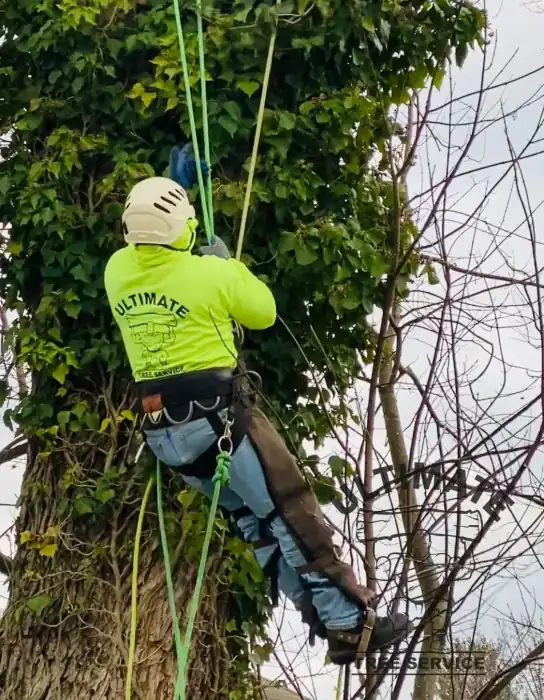
Every nor'easter and every hurricane that tracks up the coast puts the same question to every tree on your property in Freehold, Toms River, and everywhere between: which limbs are going to hold, and which ones are going to come down. Waiting until the forecast turns severe to find out is the expensive way to learn the answer. A walk around the yard before storm season, and some targeted pruning, changes the odds considerably.
Late summer and early fall, before the first nor'easter of the season rolls in, is a practical time to get a property looked at. Trees are still fully leafed out, which makes it easier to spot thinning canopy or dead sections that would be harder to notice once everything drops for winter and every branch looks equally bare.
Dead, dying, and diseased limbs go first
A dead limb has no living wood holding it together, so wind does not need to work very hard to snap it loose. A dying limb, one with thinning leaves, peeling bark, or fungus growth, is often not far behind. These are the easiest limbs to identify and usually the highest priority, because they are already weakened before the wind ever shows up. A trained eye can spot most of these in a single pass around a property.
A tree that looks fine from the ground can still be hiding a cracked limb up in the canopy, especially after an earlier storm that shook things loose without actually bringing anything all the way down. That hidden crack is often the exact limb that finally lets go in the next one, which is part of why a walk-around from someone who spends all day looking up at trees catches things a homeowner on the ground might miss.
Anything hanging over a roof, a driveway, or a power line
Location matters as much as condition. A perfectly healthy limb that happens to hang directly over a roofline, a driveway where cars are parked, or a power drop running to the house is a bigger risk than a weaker limb over open lawn, simply because of what it could hit on the way down. These are worth pruning back even when the wood itself looks fine, because the goal before a storm is reducing what could land somewhere that matters.
- Limbs directly over the roof or gutters
- Anything overhanging a driveway or where vehicles sit
- Branches close to the power line running into the house
- Limbs hanging over a deck, patio, or play area
Health, safety, and appearance are three different goals
Not all pruning is done for the same reason, and it helps to know which one you are asking for. Pruning for health removes dead or diseased wood so the rest of the tree can put its energy where it is needed. Pruning for safety targets the limbs that pose a real risk to a house, a car, or a person, regardless of whether the tree itself is otherwise healthy. Pruning for appearance shapes growth and keeps a tree looking the way an owner wants it to look. Before storm season, safety pruning is usually the priority, but a good crew will flag health issues they notice along the way even if that was not the original reason for the call.
Sometimes pruning is enough, and sometimes it buys time
One Howell homeowner's review described a tree between 125 and 150 years old that had become a real concern after storm damage, close enough to the house and the family dogs that it needed attention. Bernie's first move was not to take it down. He tried pruning it back first, working to save the tree rather than jumping straight to removal, and only recommended taking it down once it became clear the tree could not be saved safely. The stump was ground afterward, and the homeowner noted the crew stayed respectful of the yard and gardens the whole way through. That is the right order of operations: prune first where pruning can actually solve the problem, and treat removal as the last resort, not the first move.
If you want a second set of eyes on which limbs are worth worrying about before the next storm rolls in, call Ultimate Tree Service at (732) 905-0554. A quick look now is a lot less stressful than a call after the wind has already made the decision for you.
Ultimate Tree Service, (732) 905-0554
Call (732) 905-0554More articles
4 Questions to Ask Before Hiring a Local Tree Removal Service
A short checklist for Monmouth and Ocean County homeowners who want the job done right the first time.
A Tree Just Came Down on Your House or Car: What to Do First
Practical steps for the first hours after a storm drops a tree where you did not want it.